Our Lady of the Snows Parish
.png)
4810 S. Leamington Ave. Chicago IL 60638. 773 582 2266

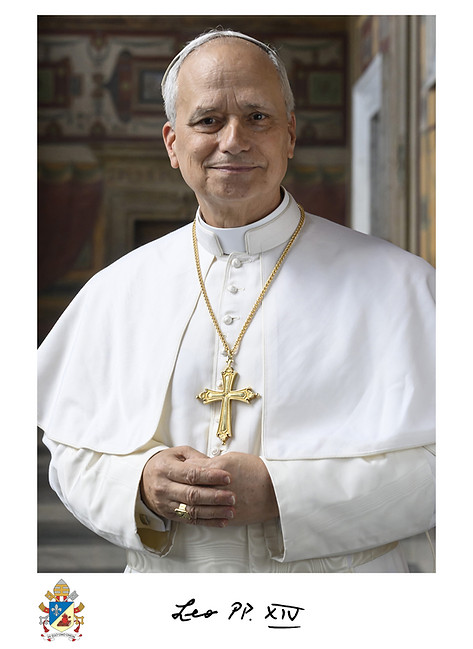
"Habemos Papam"!
Pope Leo XIV

Upcoming Events ⎮ Próximos eventos
.jpg)
.jpg)

This Week's Reflection by Pope Leo XIV
Message of the Holy Father
Listening and Fasting: Lent as a Time of Conversion
Dear brothers and sisters,
Lent is a time in which the Church, guided by a sense of maternal care, invites us to place the mystery of God back in the center of our lives, in order to find renewal in our faith and keep our hearts from being consumed by the anxieties and distractions of daily life.
Every path towards conversion begins by allowing the word of God to touch our hearts and welcoming it with a docile spirit. There is a relationship between the word, our acceptance of it and the transformation it brings about. For this reason, the Lenten journey is a welcome opportunity to heed the voice of the Lord and renew our commitment to following Christ, accompanying him on the road to Jerusalem, where the mystery of his passion, death and resurrection will be fulfilled.
Listening
This year, I would first like to consider the importance of making room for the word through listening. The willingness to listen is the first way we demonstrate our desire to enter into relationship with someone.
In revealing himself to Moses in the burning bush, God himself teaches us that listening is one of his defining characteristics: “I have observed the misery of my people who are in Egypt; I have heard their cry” (Ex 3:7). Hearing the cry of the oppressed is the beginning of a story of liberation in which the Lord calls Moses, sending him to open a path of salvation for his children who have been reduced to slavery.
Our God is one who seeks to involve us. Even today he shares with us what is in his heart. Because of this, listening to the word in the liturgy teaches us to listen to the truth of reality. In the midst of the many voices present in our personal lives and in society, Sacred Scripture helps us to recognize and respond to the cry of those who are anguished and suffering. In order to foster this inner openness to listening, we must allow God to teach us how to listen as he does. We must recognize that “the condition of the poor is a cry that, throughout human history, constantly challenges our lives, societies, political and economic systems, and, not least, the Church.”[1]
Fasting
If Lent is a time for listening, fasting is a concrete way to prepare ourselves to receive the word of God. Abstaining from food is an ancient ascetic practice that is essential on the path of conversion. Precisely because it involves the body, fasting makes it easier to recognize what we “hunger” for and what we deem necessary for our sustenance. Moreover, it helps us to identify and order our “appetites,” keeping our hunger and thirst for justice alive and freeing us from complacency. Thus, it teaches us to pray and act responsibly towards our neighbor.
With spiritual insight, Saint Augustine helps us to understand the tension between the present moment and the future fulfilment that characterizes this custody of the heart. He observes that: “In the course of earthly life, it is incumbent upon men and women to hunger and thirst for justice, but to be satisfied belongs to the next life. Angels are satisfied with this bread, this food. The human race, on the other hand, hungers for it; we are all drawn to it in our desire. This reaching out in desire expands the soul and increases its capacity.”[2] Understood in this way, fasting not only permits us to govern our desire, purifying it and making it freer, but also to expand it, so that it is directed towards God and doing good.
However, in order to practice fasting in accordance with its evangelical character and avoid the temptation that leads to pride, it must be lived in faith and humility. It must be grounded in communion with the Lord, because “those who are unable to nourish themselves with the word of God do not fast properly.”[3] As a visible sign of our inner commitment to turn away from sin and evil with the help of grace, fasting must also include other forms of self-denial aimed at helping us to acquire a more sober lifestyle, since “austerity alone makes the Christian life strong and authentic.”[4]
In this regard, I would like to invite you to a very practical and frequently unappreciated form of abstinence: that of refraining from words that offend and hurt our neighbor. Let us begin by disarming our language, avoiding harsh words and rash judgement, refraining from slander and speaking ill of those who are not present and cannot defend themselves. Instead, let us strive to measure our words and cultivate kindness and respect in our families, among our friends, at work, on social media, in political debates, in the media and in Christian communities. In this way, words of hatred will give way to words of hope and peace.
Together
Finally, Lent emphasizes the communal aspect of listening to the word and fasting. The Bible itself underlines this dimension in multiple ways. For example, the Book of Nehemiah recounts how the people gathered to listen to the public reading of the Law, preparing to profess their faith and worship through fasting, so as to renew the covenant with God (cf. 9:1-3).
Likewise, our parishes, families, ecclesial groups and religious communities are called to undertake a shared journey during Lent, in which listening to the word of God, as well as to the cry of the poor and of the earth, becomes part of our community life, and fasting a foundation for sincere repentance. In this context, conversion refers not only to one’s conscience, but also to the quality of our relationships and dialogue. It means allowing ourselves to be challenged by reality and recognizing what truly guides our desires — both within our ecclesial communities and as regards humanity’s thirst for justice and reconciliation.
Dear friends, let us ask for the grace of a Lent that leads us to greater attentiveness to God and to the least among us. Let us ask for the strength that comes from the type of fasting that also extends to our use of language, so that hurtful words may diminish and give way to a greater space for the voice of others. Let us strive to make our communities places where the cry of those who suffer finds welcome, and listening opens paths towards liberation, making us ready and eager to contribute to building a civilization of love.
I impart my heartfelt blessing upon all of you and your Lenten journey.
From the Vatican, 5 February 2026, Memorial of Saint Agatha, Virgin and Martyr
LEO PP. XIV
Mensaje del Santo Padre
Escuchar y ayunar:
La Cuaresma como tiempo de conversión
Queridos hermanos y hermanas:
La Cuaresma es el tiempo en el que la Iglesia, con solicitud maternal, nos invita a poner de nuevo el misterio de Dios en el centro de nuestra vida, para que nuestra fe recobre su impulso y el corazón no se disperse entre las inquietudes y distracciones cotidianas.
Todo camino de conversión comienza cuando nos dejamos alcanzar por la Palabra y la acogemos con docilidad de espíritu. Existe, por tanto, un vínculo entre el don de la Palabra de Dios, el espacio de hospitalidad que le ofrecemos y la transformación que ella realiza. Por eso, el itinerario cuaresmal se convierte en una ocasión propicia para escuchar la voz del Señor y renovar la decisión de seguir a Cristo, recorriendo con Él el camino que sube a Jerusalén, donde se cumple el misterio de su pasión, muerte y resurrección.
Escuchar
Este año me gustaría llamar la atención, en primer lugar, sobre la importancia de dar espacio a la Palabra a través de la escucha, ya que la disposición a escuchar es el primer signo con el que se manifiesta el deseo de entrar en relación con el otro.
Dios mismo, al revelarse a Moisés desde la zarza ardiente, muestra que la escucha es un rasgo distintivo de su ser: «Yo he visto la opresión de mi pueblo, que está en Egipto, y he oído los gritos de dolor» (Ex 3,7). La escucha del clamor de los oprimidos es el comienzo de una historia de liberación, en la que el Señor involucra también a Moisés, enviándolo a abrir un camino de salvación para sus hijos reducidos a la esclavitud.
Es un Dios que nos atrae, que hoy también nos conmueve con los pensamientos que hacen vibrar su corazón. Por eso, la escucha de la Palabra en la liturgia nos educa para una escucha más verdadera de la realidad.
Entre las muchas voces que atraviesan nuestra vida personal y social, las Sagradas Escrituras nos hacen capaces de reconocer la voz que clama desde el sufrimiento y la injusticia, para que no quede sin respuesta. Entrar en esta disposición interior de receptividad significa dejarnos instruir hoy por Dios para escuchar como Él, hasta reconocer que «la condición de los pobres representa un grito que, en la historia de la humanidad, interpela constantemente nuestra vida, nuestras sociedades, los sistemas políticos y económicos, y especialmente a la Iglesia». [1]
Ayunar
Si la Cuaresma es tiempo de escucha, el ayuno constituye una práctica concreta que dispone a la acogida de la Palabra de Dios. La abstinencia de alimento, en efecto, es un ejercicio ascético antiquísimo e insustituible en el camino de la conversión. Precisamente porque implica al cuerpo, hace más evidente aquello de lo que tenemos “hambre” y lo que consideramos esencial para nuestro sustento. Sirve, por tanto, para discernir y ordenar los “apetitos”, para mantener despierta el hambre y la sed de justicia, sustrayéndola de la resignación, educarla para que se convierta en oración y responsabilidad hacia el prójimo.
San Agustín, con sutileza espiritual, deja entrever la tensión entre el tiempo presente y la realización futura que atraviesa este cuidado del corazón, cuando observa que: «es propio de los hombres mortales tener hambre y sed de la justicia, así como estar repletos de la justicia es propio de la otra vida. De este pan, de este alimento, están repletos los ángeles; en cambio, los hombres, mientras tienen hambre, se ensanchan; mientras se ensanchan, son dilatados; mientras son dilatados, se hacen capaces; y, hechos capaces, en su momento serán repletos». [2] El ayuno, entendido en este sentido, nos permite no sólo disciplinar el deseo, purificarlo y hacerlo más libre, sino también expandirlo, de modo que se dirija a Dios y se oriente hacia el bien.
Sin embargo, para que el ayuno conserve su verdad evangélica y evite la tentación de enorgullecer el corazón, debe vivirse siempre con fe y humildad. Exige permanecer arraigado en la comunión con el Señor, porque «no ayuna de verdad quien no sabe alimentarse de la Palabra de Dios». [3] En cuanto signo visible de nuestro compromiso interior de alejarnos, con la ayuda de la gracia, del pecado y del mal, el ayuno debe incluir también otras formas de privación destinadas a hacernos adquirir un estilo de vida más sobrio, ya que « sólo la austeridad hace fuerte y auténtica la vida cristiana». [4]
Por eso, me gustaría invitarles a una forma de abstinencia muy concreta y a menudo poco apreciada, es decir, la de abstenerse de utilizar palabras que afectan y lastiman a nuestro prójimo. Empecemos a desarmar el lenguaje, renunciando a las palabras hirientes, al juicio inmediato, a hablar mal de quienes están ausentes y no pueden defenderse, a las calumnias. Esforcémonos, en cambio, por aprender a medir las palabras y a cultivar la amabilidad: en la familia, entre amigos, en el lugar de trabajo, en las redes sociales, en los debates políticos, en los medios de comunicación y en las comunidades cristianas. Entonces, muchas palabras de odio darán paso a palabras de esperanza y paz.
Juntos
Por último, la Cuaresma pone de relieve la dimensión comunitaria de la escucha de la Palabra y de la práctica del ayuno. También la Escritura subraya este aspecto de muchas maneras. Por ejemplo, cuando narra en el libro de Nehemías que el pueblo se reunió para escuchar la lectura pública del libro de la Ley y, practicando el ayuno, se dispuso a la confesión de fe y a la adoración, con el fin de renovar la alianza con Dios (cf. Ne 9,1-3). Del mismo modo, nuestras parroquias, familias, grupos eclesiales y comunidades religiosas están llamados a realizar en Cuaresma un camino compartido, en el que la escucha de la Palabra de Dios, así como del clamor de los pobres y de la tierra, se convierta en forma de vida común, y el ayuno sostenga un arrepentimiento real. En este horizonte, la conversión no sólo concierne a la conciencia del individuo, sino también al estilo de las relaciones, a la calidad del diálogo, a la capacidad de dejarse interpelar por la realidad y de reconocer lo que realmente orienta el deseo, tanto en nuestras comunidades eclesiales como en la humanidad sedienta de justicia y reconciliación.
Queridos hermanos, pidamos la gracia de vivir una Cuaresma que haga más atento nuestro oído a Dios y a los más necesitados. Pidamos la fuerza de un ayuno que alcance también a la lengua, para que disminuyan las palabras que hieren y crezca el espacio para la voz de los demás. Y comprometámonos para que nuestras comunidades se conviertan en lugares donde el grito de los que sufren encuentre acogida y la escucha genere caminos de liberación, haciéndonos más dispuestos y diligentes para contribuir a edificar la civilización del amor. Los bendigo de corazón a todos ustedes, y a su camino cuaresmal.
Vaticano, 5 de febrero de 2026, memoria de santa Águeda, virgen y mártir.
LEÓN XIV PP.
OFFICE HOURS ⎮ HORARIO DE OFICINA
Monday (lunes) to Friday (Viernes)
9:00 am – 7:00 pm
​
&
​
Saturday | Sábado
9:00 am to 1:30 pm
Sunday |Domingo
9:00 am - 3:00 pm
​
​